→ Back to all English articles
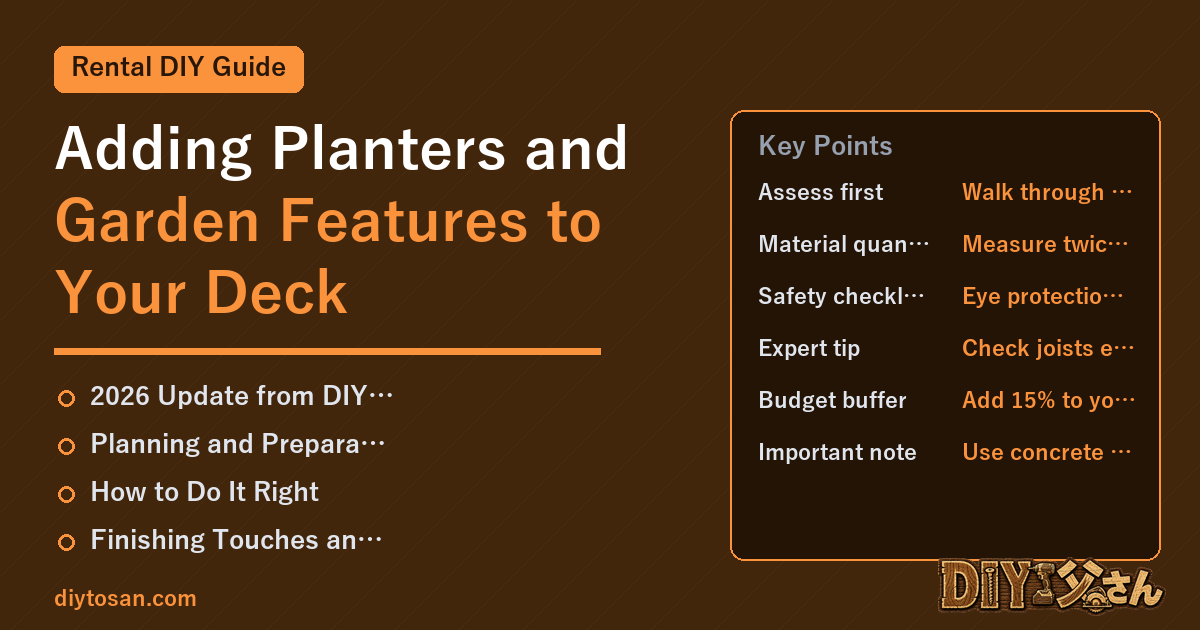
2026 Update from DIY Dad: Adding Planters and Garden Features to Your Deck
This guide covers everything you need to know about adding planters and garden features to your deck. Whether you are tackling this for the first time or looking to refine your technique, the approach I share here is based on real experience renovating properties across Japan. The goal is always the same: a professional-looking result on a realistic home-owner budget.
One thing I have learned after years of DIY work in Japanese homes is that preparation accounts for at least half the final quality. Rushing past the prep phase is the number-one reason DIY projects fail or look amateur. Take your time at the start and the rest flows naturally.
Planning and Preparation
Before you pick up a tool, make sure you have the right materials and a clear understanding of the scope. Here is what to gather:
- Assess first: Walk through the entire work area and note every problem spot. Photograph it. This becomes your punch list.
- Material quantities: Measure twice, buy 10u201315% extra. Returning to the store mid-project wastes a full afternoon.
- Safety checklist: Eye protection, dust mask (N95 for dusty work), and gloves are non-negotiable. For ladder work, always have a helper on the ground.
- Expert tip: Check joists every spring by probing with a screwdriver u2014 soft spots indicate rot.
- Budget buffer: Add 15% to your material cost estimate for unexpected discoveries u2014 hidden rot, incorrect measurements, and damaged tiles are common surprises.
How to Do It Right
With prep done, here is the core sequence for this type of project. Follow the order carefully u2014 skipping steps causes rework.
- Step 1 u2014 Surface preparation: Clean thoroughly, remove loose material, and let everything dry completely before applying any product.
- Step 2 u2014 First application: Apply primer, base coat, or first layer as appropriate. Thin coats always outperform thick ones.
- Step 3 u2014 Check and adjust: After the first coat or stage, step back and inspect from multiple angles and lighting conditions. Fix problems now before adding more material.
- Step 4 u2014 Final application: Apply the finish coat or final assembly. Work systematically u2014 don’t skip sections.
- Important note: Use concrete tube forms (Sonotube) with post bases rather than burying wood directly in soil.
- Drying and curing: Most products need 24 hours before light use and 72 hours for full use. Don’t rush this u2014 one bad mark in fresh paint means sanding and repainting.
Finishing Touches and Maintenance
The difference between a good DIY result and a great one often comes down to the final 20% of effort. Here are the details that matter:
- Edge finishing: Clean, crisp edges define quality work. Use painter’s tape, remove it at 45u00b0 angle while the product is still slightly wet for the sharpest lines.
- Long-term protection: Sand the deck surface to 80-grit before restaining to ensure adhesion.
- Ongoing maintenance: Most DIY work needs a check-up every 1u20132 years. Put a reminder in your calendar now u2014 small maintenance prevents large repairs later.
- Documentation: Photograph your work after completion, note the products used and their batch numbers. Future repairs are much easier when you know exactly what was used.
- Additional insight: Composite decking costs 2u20133x more upfront but requires almost no maintenance over 25 years.
Hi, it’s DIY Dad.
I built my first deck at my rental property in Nagano prefecture u2014 it took me three weekends but the tenants absolutely loved it. Now every spring I spend one morning doing a quick inspection and touch-up, and the deck still looks great after seven years.
See you next time!