u2192 Back to all English articles
Hi there, DIY Dad here! Continuing the 1st-floor Japanese room renovation.
With the woodwork discoloration removed, it was time to re-paper the shoji (u969cu5b50) u2014 the traditional Japanese sliding screen frames covered with translucent paper. Tools and materials: shoji paper, paste, brush, cutter, spray bottle.
The process: remove old shoji paper u2192 surface prep u2192 apply new shoji paper u2192 mist with water to tension the paper.
Step 1 u2014 Remove the Old Shoji Paper
Wet the paste lines with a brush. The paste softens and the paper peels right off.
Step 2 u2014 Surface Prep
Once the paper is off, clean the paste residue from the lattice frame. Dedicated paste-remover solution is sold, but elbow grease alone gets the job done.
Step 3 u2014 Apply New Shoji Paper
Align the paper against two edges of the frame and trim it to size, then roll one end up. Spread paste evenly across all the frame members, then unroll the paper over them.
Step 4 u2014 Mist with Water
Freshly pasted shoji paper is wrinkled and wavy. After the paste dries completely, mist the entire surface lightly with water. As the water evaporates, the paper contracts and pulls taut. If the paper already looks perfectly flat after drying, the mist step isn’t needed.
Shoji replacement complete! With the tatami (straw mat flooring) and walls already finished, the major work was done. Next up: replacing the switch and outlet covers.
- Step 1 u2014 Remove the Old Shoji Paper
- Step 2 u2014 Surface Prep
- Step 3 u2014 Apply New Shoji Paper
- Step 4 u2014 Mist with Water
- Switch and Outlet Covers
- 2026 DIY Dad’s Update: Japanese Room Renovation u2014 Planning is 80% of the Work
- Overview of Work Done in This Japanese Room
- About Shinkabe u2014 The Exposed-Column Wall Style
- What Surprised DIY Dad About Diatomite Plaster
- Orbital Sander u2014 Fastest Way to Clean Up Woodwork
- Japanese Room Renovation Resources
Switch and Outlet Covers
ud83duded2 RECOMMENDED PRODUCTS
Fusuma Replacement Paper Kits
Fusuma renewal is the fastest Japanese-room refresh u2014 paper, paste, and 2 hours.
Tools and materials: switch cover, outlet cover, impact driver, screwdriver. For this entire renovation, DIY Dad chose Panasonic’s Cosmo Series Wide 21 night-light switches throughout. Standard old-style switch plates look dated, but swapping to wide plates alone makes the interior feel like a newer home.
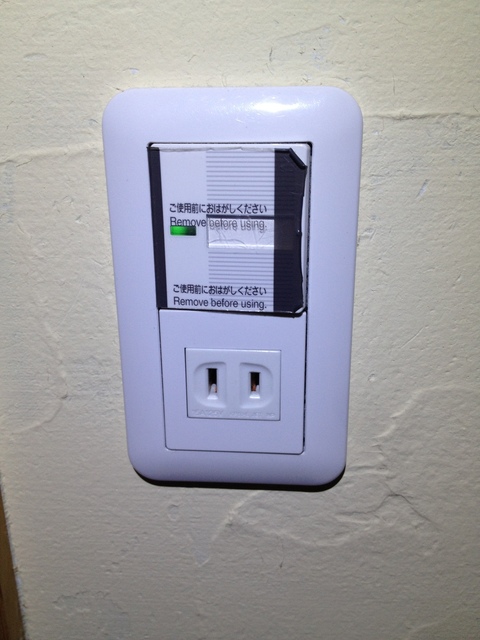
u2191 Combined switch and outlet unit
The Cosmo Series comes in many configurations, including units that combine a switch and outlet in one plate. Just be careful not to mix up the switch wiring and power wiring when connecting. That’s all for today u2014 see you next time!
u270fufe0f Originally published: November 19, 2016 (former Seesaa blog) | ud83dudd04 Updated: May 7, 2026
2026 DIY Dad’s Update: Japanese Room Renovation u2014 Planning is 80% of the Work
ud83duded2 AVAILABLE ON AMAZON JAPAN
Tatami Repair Materials (Amazon Japan)
Fresh tatami edges signal a well-maintained property u2014 tenants feel it immediately.
Japanese room renovation has its own distinct challenges compared to a Western-style room. Elements like shinkabe (u771fu58c1 u2014 exposed-column walls), tatami flooring, shoji screens, and the kamoi/shikii tracks (upper and lower door rails for fusuma sliding panels) are all unique to Japanese architecture. It was a learning curve at first.
Overview of Work Done in This Japanese Room
- Tatami surface replacement (contracted out)
- Diatomite plaster on walls (DIY)
- Cleaning and restoring columns and trim woodwork (DIY)
- Shoji paper replacement (DIY)
- Air conditioner installation (DIY)
The tatami work was the one task contracted to a professional. It’s possible to DIY, but measuring, cutting, and sewing the edging requires specialist skill u2014 the cost-benefit calculation favors hiring out.
About Shinkabe u2014 The Exposed-Column Wall Style
ud83duded2 RECOMMENDED PRODUCTS
Shoji Screen Paper & Repair Kits
Replace shoji paper every 3u20135 years u2014 it yellows faster than any other surface.
Shinkabe (u771fu58c1) is the traditional Japanese construction method where structural columns are left exposed on the wall surface, rather than hidden inside the wall as in Western-style ohkabe (u5927u58c1) construction. This means the junction between column and plaster wall needs special attention during finishing.
When applying diatomite plaster, spreading it onto the column surface causes peeling, so the columns were masked with masking tape before plastering. How neatly you handle those edges determines how clean the final result looks. DIY Dad used two masking tape brands u2014 Nitom and Kamoi u2014 finding the narrow Kamoi tape most useful in tight areas.
What Surprised DIY Dad About Diatomite Plaster
Honest first impression after applying diatomite plaster for the first time: “I had no idea it could look this good!” Unlike plain wallpaper, the trowel marks left behind create a texture and character all their own. Diatomite plaster and a Japanese room are a perfect match.
The main rule: don’t touch it while it’s drying. Diatomite dries slowly, and touching it collapses the trowel texture. Patience is essential.
Orbital Sander u2014 Fastest Way to Clean Up Woodwork
An orbital sander was used to remove the discoloration from columns and trim. Ten times faster than sanding by hand, with more consistent results. Start with 240-grit and finish with 400-grit for a smooth result. Deep scratches get knocked down with 120-grit first before moving to finer grades.
Japanese Room Renovation Resources
DIY-renovating a Japanese room is a high-difficulty project, but the satisfaction when it’s done is extraordinary. The toughest part for DIY Dad was applying the diatomite plaster in a shinkabe-style room. Reviewing real renovation examples beforehand makes it much easier to visualize the result.
DIY Renovation Quote Review Manual
How to read, compare, and negotiate contractor quotes. This manual saved me u00a5800,000 on a single renovation project.
ud83cudfe0 More from DIY Father
15 years of landlord experience u00b7 3 apartment buildings u00b7 DIY renovations that saved millions of yen. Browse all articles at diytosan.com