u2192 Back to all English articles
Hi there, I’m DIY Dad. ^ ^
Time to start the 1st-floor Japanese room (washitsu) renovation. This room is on the left side of the floor plan.
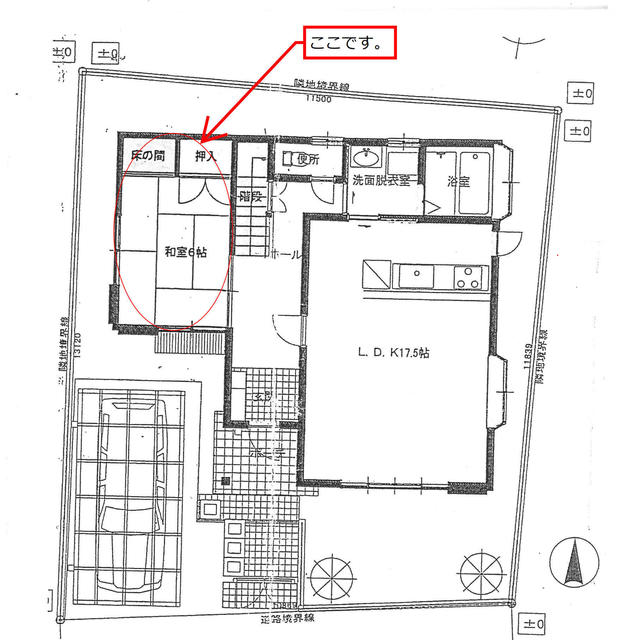
The 1F floor plan u2014 the Japanese room is the space on the left.
What Is a Japanese Room (Washitsu)?
ud83duded2 RECOMMENDED PRODUCTS
Fusuma Replacement Paper Kits
Fusuma renewal is the fastest Japanese-room refresh u2014 paper, paste, and 2 hours.
A washitsu is a traditional Japanese-style room covered with tatami mats u2014 thick, woven rush-grass floor panels that are soft underfoot and naturally cool in summer. The room is framed by shoji (translucent paper-and-wood sliding screens) and fusuma (opaque sliding panel doors), often with a tokonoma (decorative alcove) in a central room. Shoji create a softly diffused, layered sense of light that is distinctly different from a Western window u2014 you’re neither fully inside nor fully outside, which gives the space a contemplative, unhurried quality.
One of the washitsu’s great strengths is versatility: push aside some cushions and it’s a living room; lay out futons and it becomes a bedroom; bring in a low table and it’s a dining space. The igusa (rush grass) in tatami mats also has a natural humidity-regulating effect, helping the room stay comfortable year-round.
The downside is maintenance. Tatami, fusuma, shoji, and earthen plaster walls are all delicate materials u2014 they require regular attention and are susceptible to stains and wear, especially in households with young children or pets.
I’ll admit I had a vague, outdated image of Japanese rooms as tired and old-fashioned. That was completely wrong. A well-maintained washitsu is a genuinely wonderful space. ^ ^
How This Room Will Be Used
ud83duded2 AVAILABLE ON AMAZON JAPAN
Tatami Repair Materials (Amazon Japan)
Fresh tatami edges signal a well-maintained property u2014 tenants feel it immediately.
After moving in, this room will mainly serve as the family bedroom u2014 everyone sleeps here on futons laid out each night. It will also be available for work-related visitors on occasion, though mainly just for meetings. What I want from this room is a space to relax and sleep well. ^ ^
Current Condition of the Room
Here’s what I found when I first walked through:
- Dusty overall, but no major structural damage
- Ceiling looks like it just needs a wipe-down
- Walls are in shinkabe style (exposed columns) with a Japanese-pattern wallpaper finish
- Wallpaper seams lifting in several places
- Columns and trim weathered to a deep brown
- Shoji (paper screen doors) have tears and holes
- Tatami surface is worn, but the underlying core looks sound
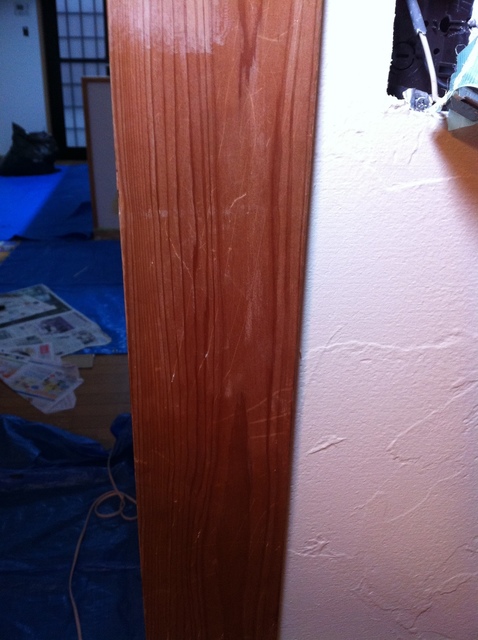
Discolored column. (Please ignore the wall on the right u2014 that’s a whole other situation.)
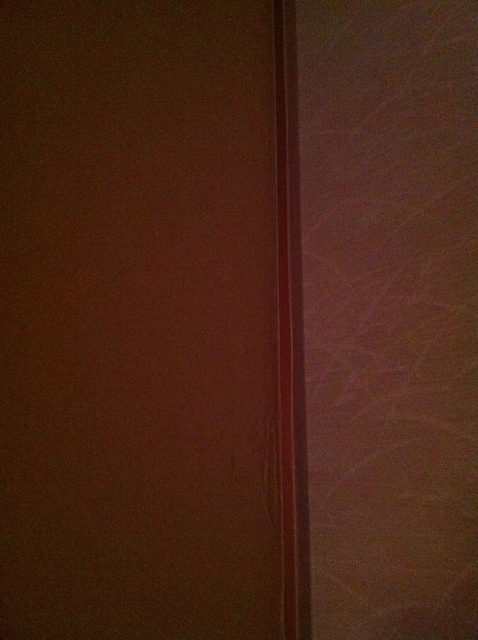
The original wallpaper on the right side of the wall. Hard to see clearly in the dim light.
Overall, the room is in better shape than I expected u2014 a light renovation should do it. But “light” isn’t going to keep my motivation up, so I’m adding a personal touch: diatomite plaster on the walls. I want to boost the room’s humidity-regulating performance and give it some real character.
Work Plan
ud83duded2 RECOMMENDED PRODUCTS
Shoji Screen Paper & Repair Kits
Replace shoji paper every 3u20135 years u2014 it yellows faster than any other surface.
- Tatami mats u2014 full resurfacing (omote-gae)
- Walls u2014 diatomite plaster finish
- Exposed wood surfaces (columns, trim) u2014 discoloration removal
- Shoji (paper screens) u2014 full re-papering
- Light switches u2014 upgrade to wide-panel type
The list looks short, but the visual transformation will be dramatic. All the tatami and all the wall surfaces becoming new at once u2014 you’d be surprised how much that changes a room. ^ ^
2026 Update u2014 Planning Is 80% of the Work
Japanese room renovation has a different kind of difficulty compared to Western-style rooms. Shinkabe construction, tatami, shoji, and the kamoi/shikii (upper and lower door tracks) are all unique to traditional spaces and can catch you off guard. Here’s the full task list I ended up completing:
- Tatami mat resurfacing u2014 hired a professional
- Diatomite plaster wall finish u2014 DIY
- Wood surface cleaning on columns and trim u2014 DIY
- Shoji replacement u2014 DIY
- Air conditioner installation u2014 DIY
About Shinkabe Construction
Shinkabe (“true wall”) is the traditional method where the structural columns are left exposed on the wall surface. This is in contrast to ookabe (“large wall”) construction, where columns are hidden inside the wall. With shinkabe, you need to mask off the columns carefully before applying plaster u2014 the joint between column and plaster surface determines much of the final appearance.
Diatomite Plaster u2014 The Highlight of This Project
Applying diatomite plaster was the most challenging and most rewarding part of the whole project. The first time I finished a wall, I genuinely thought “I can’t believe how much character this creates.” Unlike flat wallpaper, the trowel marks stay in the surface and give the wall a texture and depth that feels alive. Diatomite and a Japanese room are a natural match.
One hard-learned rule: remove the masking tape before the plaster dries. I forgot this and paid for it.
DIY Renovation Quote Review Manual
How to read, compare, and negotiate contractor quotes. This manual saved me u00a5800,000 on a single renovation project.
ud83cudfe0 More from DIY Father
15 years of landlord experience u00b7 3 apartment buildings u00b7 DIY renovations that saved millions of yen. Browse all articles at diytosan.com