u2192 Back to all English articles
Hi there, I’m DIY Dad. ^ ^
Continuing the 1st-floor Japanese room renovation. With the work plan set, it was time to get started.
First task: resurfacing all the tatami mats.
What Is Tatami Resurfacing?
ud83duded2 RECOMMENDED PRODUCTS
Fusuma Replacement Paper Kits
Fusuma renewal is the fastest Japanese-room refresh u2014 paper, paste, and 2 hours.
Tatami mats are made up of three parts: the tatami-doko (the thick inner core, traditionally compressed rice straw), the tatami-omote (the woven rush-grass surface), and the tatami-heri (the fabric border strip). Over time, the surface becomes worn, frayed, or darkened with grime.
Resurfacing (omote-gae) means keeping the original core intact and replacing only the surface and border with new materials. It restores the look and feel of the mat without replacing the whole thing.
There is also a technique called ura-gaeshi (flipping), done about 3 to 5 years after a new mat or recent resurfacing. Because the rush-grass surface can be used on both sides, the mat can be removed, turned over, and re-attached for another period of fresh use u2014 usually 2 to 3 more years of green, smooth surface.
This time, I opted for full resurfacing rather than a flip.
Hiring a Professional u2014 Why I Didn’t DIY This Part
ud83duded2 AVAILABLE ON AMAZON JAPAN
Tatami Repair Materials (Amazon Japan)
Fresh tatami edges signal a well-maintained property u2014 tenants feel it immediately.
Tatami resurfacing is one part I outsourced. The fresh, clean scent of natural igusa (rush grass) and the smooth feel underfoot are things that u2014 when you factor in the sourcing, cutting, and border-stitching involved u2014 are genuinely better left to professionals from a cost-per-result standpoint. ^ ^
You could technically DIY it, but tatami is where bare feet touch every day. My energetic kids would be complaining immediately if the surface turned out scratchy. That was reason enough to call in a pro.
Researching Tatami Options
(adsbygoogle=window.adsbygoogle||[]).push({});
There’s a lot of variation in tatami resurfacing. Pricing is largely determined by the quality grade of the rush-grass surface (tatami-omote). Key factors include: domestic (Japanese) vs. imported (typically Chinese) igusa, length and quality of the individual rush stalks, and how densely the grass is woven. Higher quality means better appearance, more durability, and a richer color after sun exposure. The border fabric (heri) generally has little effect on the price unless it’s a custom order.
As a rough guide, stepping up one quality grade typically costs just over 1,000 yen more per mat u2014 and better mats hold up longer and look better as they age.
A lot of businesses show up online, and similar-grade igusa is priced similarly across most of them. After some research, I asked around through personal connections and found a tatami shop through a friend of a friend. That felt more trustworthy than a random online search, so I went with them.
I chose domestic igusa at a grade I felt comfortable with. Total cost: u00a540,950 for 6 mats (a 6-jo room) u2014 including the new surfaces, border strips, and pickup fee.
Expensive? Reasonable? Compared to finishing a floor with cushion flooring (vinyl sheeting), it’s significantly pricier. But if you’re committed to keeping the Japanese room as a Japanese room, it’s a necessary cost. Traditional rooms do carry ongoing maintenance expenses.
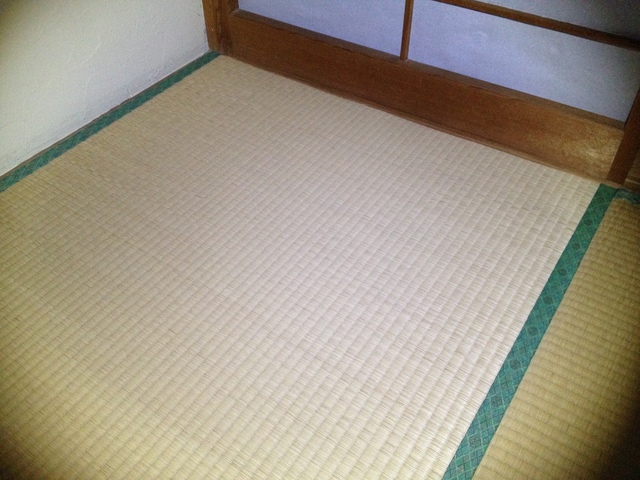
After resurfacing u2014 the mats are back in place.
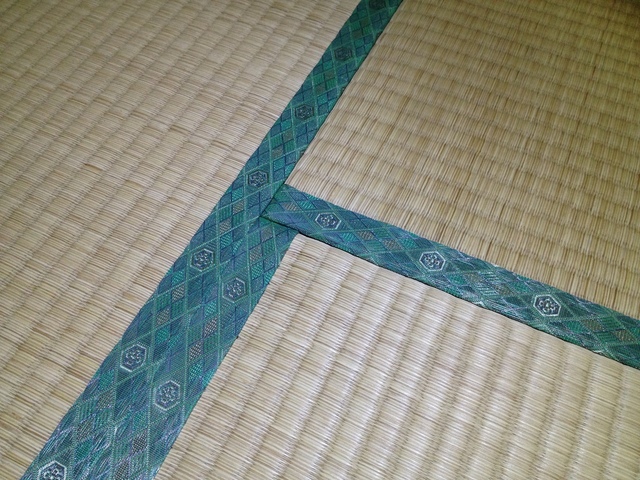
A close-up of the new border (heri) strip.
Watching a Pro Work u2014 Always Worth It
ud83duded2 RECOMMENDED PRODUCTS
Shoji Screen Paper & Repair Kits
Replace shoji paper every 3u20135 years u2014 it yellows faster than any other surface.
This was my first time commissioning outside work on this project, and I love watching professionals do their thing. Their workflow is efficient and deliberate, and you always pick up at least a few pieces of knowledge just by observing. Things that are obvious to them are often completely new to me u2014 I caught myself staring in admiration more than once.
One thing I hadn’t thought about: tatami mats in a room have a specific layout arrangement, and if you shuffle the mats out of their original positions during resurfacing, they won’t sit properly when you put them back. The pro handled this without even thinking about it. Good to know for next time.
2026 Update u2014 Japanese Room Planning Summary
Here’s the full work list for this Japanese room renovation:
- Tatami mat resurfacing u2014 hired a professional
- Diatomite plaster wall finish u2014 DIY
- Wood surface cleaning on columns and trim u2014 DIY
- Shoji (paper screen) replacement u2014 DIY
- Air conditioner installation u2014 DIY
The tatami was the only job I outsourced. Measuring, cutting, and border-stitching requires specialized skill u2014 the cost-benefit math strongly favors professional work here. For everything else, DIY all the way. ^ ^
DIY Renovation Quote Review Manual
How to read, compare, and negotiate contractor quotes. This manual saved me u00a5800,000 on a single renovation project.
ud83cudfe0 More from DIY Father
15 years of landlord experience u00b7 3 apartment buildings u00b7 DIY renovations that saved millions of yen. Browse all articles at diytosan.com