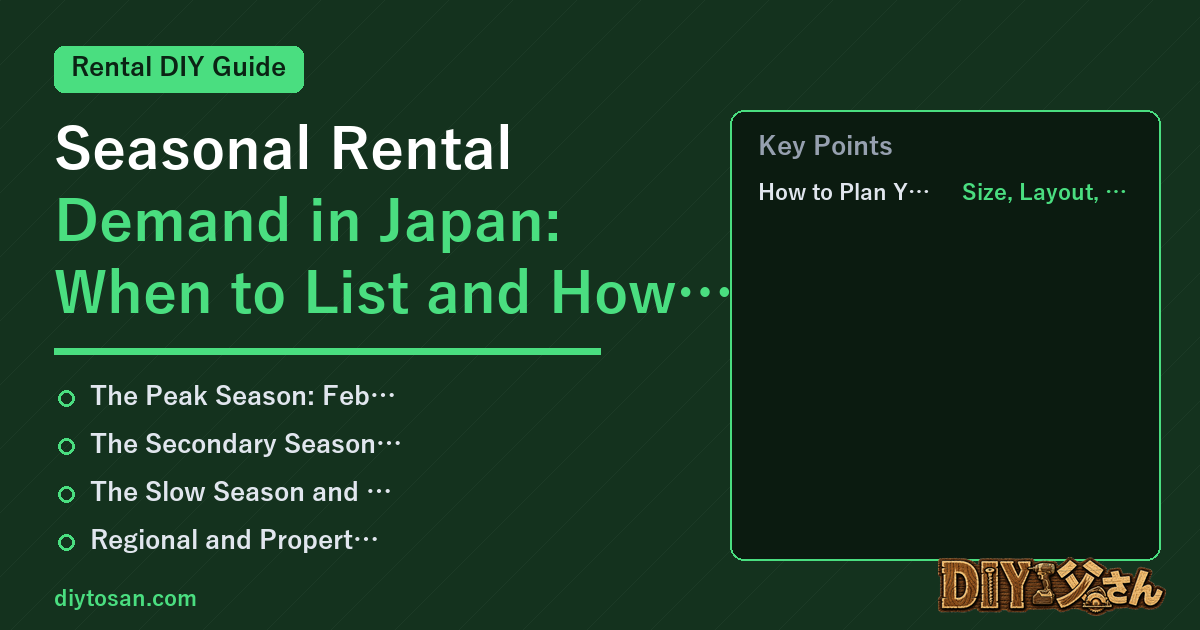
Seasonal Rental Demand in Japan: When to List and How to Time Vacancies
Japan’s rental market is one of the most seasonal in the world. The timing of when you list a property and when it becomes vacant can make a significant difference in how quickly you fill it and at what price. This seasonality is not random u2014 it is driven by Japan’s highly predictable cultural and institutional rhythms. Understanding it is one of the most practical advantages a landlord can develop.
The Peak Season: February Through April
ud83duded2 RECOMMENDED PRODUCTS
Japan Real Estate Investment Guides
Understand the market before you enter it u2014 these books accelerate your learning curve.
The Japanese fiscal and academic year begins on April 1. This single fact drives the most concentrated surge in rental demand of the year. Students admitted to universities for the April entry need housing by late March. Corporate employees transferred to new offices or hired as new graduates relocate in March and April. Government officials rotate positions on a national scale in the same window.
The search process begins well before April. Most serious apartment hunters are actively searching in January and February, signing contracts in February and March, and moving in during March and early April. For landlords, this means the critical window to attract these tenants is December through February. A property listed in late January at a competitive price will receive far more attention than the same property listed in May.
During peak season, landlords hold more negotiating power. Properties that have sat vacant can often be filled, and slightly above-market pricing is more likely to be accepted. Conversely, tenants who need to secure housing before April 1 have little flexibility u2014 they will not wait for a better deal to appear in June.
The Secondary Season: September and October
ud83duded2 RECOMMENDED ON AMAZON US
Japanese Language Textbooks (N3 Level)
Reading contracts in Japanese removes your dependence on agents and translators.
A smaller but meaningful wave of rental demand occurs in September and October. This corresponds to the October entry for some graduate programs, mid-year corporate transfers, and foreign students enrolled in universities with fall semester starts. It is substantially smaller than the spring peak but worth noting, particularly in university towns and international business districts.
Some landlords deliberately time lease renewals and move-outs to target this secondary season, particularly for units that appeal to graduate students or international tenants. If you know a lease will end, communicating early with the tenant about move-out timing u2014 and if possible, aligning it with September vacancies rather than summer u2014 can reduce the time the unit sits empty.
The Slow Season and What to Do During It
The months from June through August and November through January tend to be the slowest for rentals. Demand drops sharply after the April rush subsides. A property listed for the first time in July faces a much longer average vacancy period than one listed in February.
If you have a unit that becomes vacant in the slow season, there are a few strategic options. First, consider whether the timing of your previous tenant’s departure could have been managed differently u2014 some landlords offer a small incentive for tenants to extend their lease to align with peak season. Second, if vacancy is unavoidable, use the slow months productively: complete any repairs and renovations, update photographs, and have the property in show-ready condition so it is ready to move the moment demand picks up in winter. Third, be prepared to price slightly below market during slow periods to avoid multi-month vacancy.
Regional and Property-Type Variations
ud83duded2 RECOMMENDED PRODUCTS
Due Diligence Checklists & Guides
Never skip due diligence. These tools help you ask the right questions.
Seasonality patterns are strongest in major urban areas with large student and new-graduate populations u2014 Tokyo, Osaka, Nagoya, Kyoto, Fukuoka. In rural areas and smaller cities, demand is lower and less concentrated, so seasonality is less pronounced but the slow periods feel even slower.
Property type also matters. Studio and one-bedroom units (1R, 1K, 1LDK) see the strongest spring peak because they primarily house students and young single professionals. Larger family units (2LDK, 3LDK) have somewhat smoother demand because family relocations happen throughout the year, though they still cluster somewhat in spring.
Share houses and short-term furnished rentals operate on different seasonal patterns, often influenced by foreign resident arrivals or project-based corporate assignments. If your property targets these markets, research their specific demand cycles rather than assuming the standard April pattern applies.
Complete Roadmap: First Rental Property in Japan
Everything I wish I knew before my first purchase u2014 financing, due diligence, negotiation, and year-one management guide.
ud83cudfe0 More from DIY Father
15 years of landlord experience u00b7 3 apartment buildings u00b7 DIY renovations that saved millions of yen. Browse all articles at diytosan.com