ud83dudcda Wood Deck Build Log u2014 1 of 19
u2190 (first article) u00b7 Series Index u00b7 Design #13: Floor Board Layout u2192
2026 Update from DIY Dad: Final Planning Phase u2014 Preparing for Construction
ud83duded2 RECOMMENDED PRODUCTS
Pressure-Treated Deck Lumber
Pressure-treated lumber is the baseline u2014 skip it and you’ll be rebuilding in 5 years.
The latter half of the planning phase. Planning continued through 2018, but the final design was locked in and construction preparations were complete. The major design change was switching the structural skeleton material to steel scaffold pipe.
Why Steel Scaffold Pipe for the Skeleton
I changed the skeleton from the originally planned aluminum square tube to steel scaffold pipe (u03a648.6 mm). The reasons were cost reduction and ease of sourcing. Scaffold pipe is available cheaply at any home center and can be freely assembled with clamps.
The downside is that it can rust, but this is addressed with a rust-proof paint coat before construction. The structural strength is also more than adequate u2014 it’s a proven choice for wood deck skeletons.
Final Design Specifications
DIY Dad’s final confirmed wood deck specifications:
- Decking: Serangan Batu hardwood, 20 mm thick u00d7 120 mm wide
- Skeleton: Steel scaffold pipe + clamps
- Deck floor size: 4.5 m wide u00d7 2.4 m deep
- Roof: Polycarbonate corrugated sheet (pergola structure)
- Railing / fence: Serangan Batu hardwood
- Stairs: 2 steps
The long planning period meant very few construction mistakes. “Take your time planning and build it right” rather than “rush in and fail” is the DIY Dad way.
Timing Your Material Orders
Hardwood is purchased from online specialty stores, and lead times can be 1u20132 weeks. The best approach is to place the order before construction starts so the wood arrives just as the skeleton is going up.
Design Log
ud83duded2 RECOMMENDED PRODUCTS
Deck Stains & Waterproof Sealers
Stain every 2u20133 years. It’s the single cheapest way to double deck lifespan.
Hi, I’m DIY Dad.
With urgent work piling up I had no time to write u2014 and before I knew it, more than 6 months had passed since my last post. Time flies. Interestingly, even without new posts, a steady number of page views was coming in every day. I imagine views would grow even more once more articles are published. It’s exciting to see something generated from nothing u2014 and to think that DIY Dad’s articles might be helping readers with their own DIY projects is genuinely heartening.
Continuing with the exterior renovation series. The last calculation to run is the column strength.
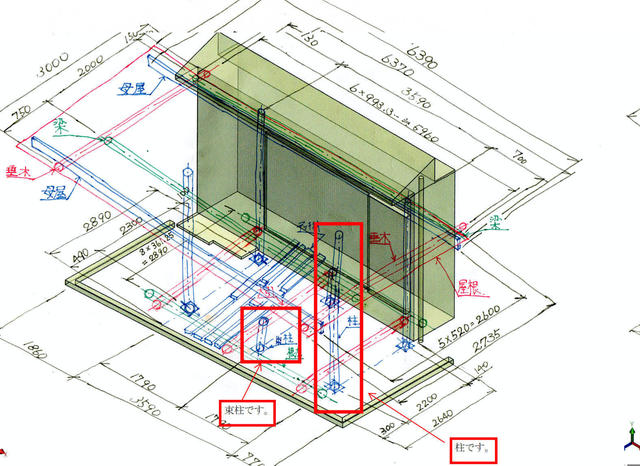
u2191 Columns
Column strength calculation is a bit different from the beam deflection calculations done so far. Here we check buckling strength.
What Is Buckling?
As shown in the diagram below, apply a load from above onto a column. Beyond a certain load threshold, the column suddenly bends sideways. This phenomenon is called “buckling.”
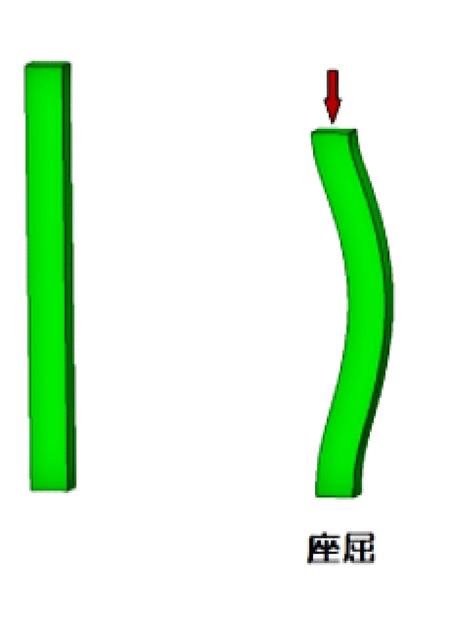
Slender members are far weaker in compression than in tension, and they fail at loads much smaller than the material’s inherent strength. The load at which buckling occurs is called the buckling load; the corresponding stress is the buckling stress. When designing structures under compression, always check that buckling will not occur.
Buckling strength is determined by the geometric shape of the member and can be calculated using Euler’s formula.
Euler’s Formula
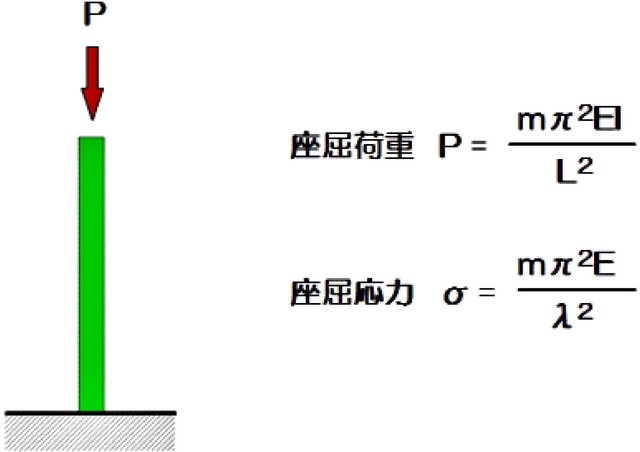
- P: Buckling load
- E: Modulus of elasticity (Young’s modulus)
- I: Second moment of area
- L: Buckling length
- u03bb: Slenderness ratio u2192 u03bb = L / i
- i: Radius of gyration u2192 i = u221a(I/A)
- A: Cross-sectional area of the column
- m: Constant determined by the end-fixity conditions
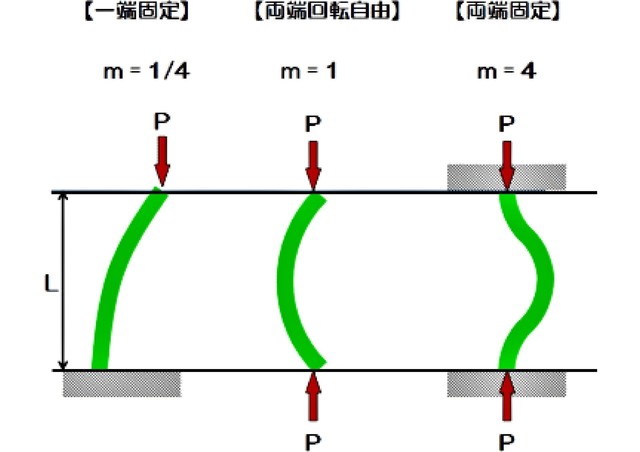
Buckling Calculation
The bundle posts below the deck have short buckling lengths and should be fine. The critical section is the column span from the deck surface up to the roof beam u2014 that’s where the longest unsupported length exists. Let’s calculate that section.
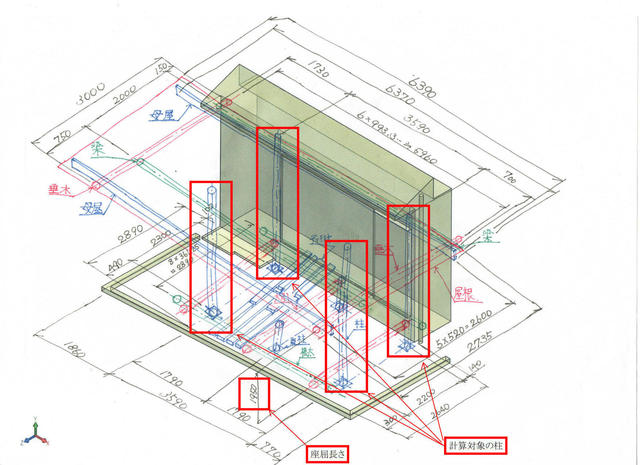
u2191 Target column section for buckling calculation
First, let me compile the section properties for the Super Light 700 pipe:
- Cross-sectional area: A = 264.6 mmu00b2
- Section modulus: Z = 2,990 mmu00b3
- Second moment of area: I = 72,600 mmu2074
- Modulus of elasticity (SS400): E = 2.05 u00d7 10u2075 N/mmu00b2
- Long-term allowable stress: u03c3 = 157 N/mmu00b2
- Short-term allowable stress: u03c3 = 235 N/mmu00b2
Given:
- E = 2.05 u00d7 10u2075 N/mmu00b2
- I = 72,600 mmu2074
- L (buckling length) = 1,950 mm
- i (radius of gyration) = u221a(I/A) = u221a(72,600 / 264.6) = 16.6 mm
- u03bb (slenderness ratio) = L / i = 1,950 / 16.6 = 117.5
- A = 264.6 mmu00b2
- m (end-fixity constant) = 1
Buckling load by Euler’s formula (P = mu03c0u00b2EI / Lu00b2):
P = 1 u00d7 u03c0u00b2 u00d7 2.05 u00d7 10u2075 u00d7 72,600 / 1,950u00b2 = 38,629.7 N
The applied load condition on the columns equals that above the beams. Snow load = 2,569 N. With 4 columns sharing the load:
Load per column (short-term compressive axial force) = 2,569 u00f7 4 = 643 N
38,629.7 N > 643 N u2192 PASS.
Safety factor: s = 38,629.7 / 643 = 60 u2014 more than sufficient.
That’s all for today!
ud83dudcda Wood Deck Build Log u2014 1 of 19
u2190 (first article) u00b7 Series Index u00b7 Design #13: Floor Board Layout u2192
DIY Renovation Quote Review Manual
How to read, compare, and negotiate contractor quotes. This manual saved me u00a5800,000 on a single renovation project.
ud83cudfe0 More from DIY Father
15 years of landlord experience u00b7 3 apartment buildings u00b7 DIY renovations that saved millions of yen. Browse all articles at diytosan.com