Rental Property Inspection Guide: What to Check Before and After Tenancy
The inspection process is the evidentiary foundation of every landlord-tenant relationship. Without proper documentation of a property’s condition at move-in and move-out, disputes about security deposit deductions become battles of memory u2014 and those battles are expensive even when you win. After years of refining my inspection process, I now approach it with the same rigor I’d apply to any legal document.
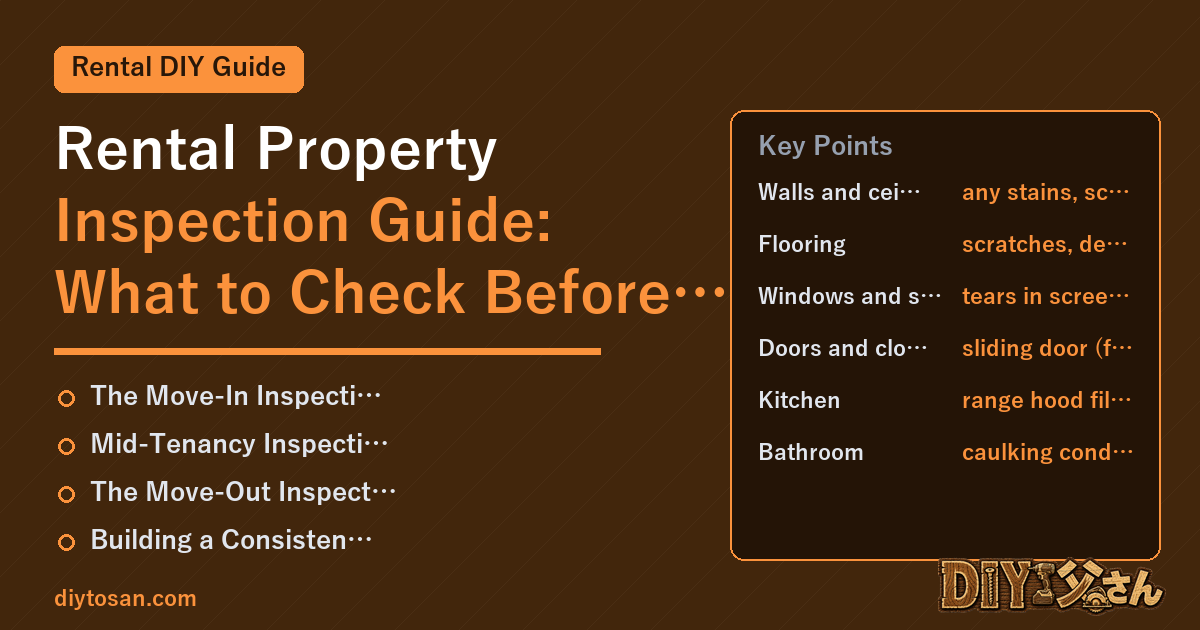
The Move-In Inspection: Setting the Baseline
ud83duded2 RECOMMENDED ON AMAZON US
Top Property Management Books
Build the knowledge base that separates professional landlords from amateur ones.
I conduct the move-in inspection (nyuukyo mae tenken) together with the new tenant on the day they receive the keys u2014 before they bring in any furniture or belongings. This is non-negotiable. Once their stuff is in the unit, we can no longer tell what damage was pre-existing.
I use a room-by-room checklist that covers every surface and fixture. For each room I document:
- Walls and ceiling: any stains, scuffs, nail holes, water marks, or wallpaper peeling
- Flooring: scratches, dents, warping, worn areas, and any damage to tatami if present
- Windows and screens: tears in screens (amido), operation of locks and handles, condition of window tracks
- Doors and closets: sliding door (fusuma/shoji) condition, door stops, closet rails
- Kitchen: range hood filter condition, condition of range/cooktop, under-sink cabinet for any water staining or odor
- Bathroom: caulking condition, ventilation fan function, drain condition, tile grout
- Fixtures: light switches, outlet covers, any visible wiring issues
- Appliances: if I supply a water heater (kyuutouki), air conditioner, or built-in range, I test each one with the tenant present
Every identified item is photographed with a timestamp. I then have the tenant sign the completed checklist, and I provide them a copy. In twelve years of self-management, I have never had a move-out dispute where both parties had signed a detailed move-in inspection report.
Mid-Tenancy Inspections: Staying Ahead of Problems
ud83duded2 RECOMMENDED PRODUCTS
Landlord-Tenant Law Guides
Know exactly what you can and cannot do u2014 essential reading before any dispute.
Japanese law allows landlords to inspect rental properties with appropriate advance notice u2014 I give a minimum of one week’s notice and I frame the inspection as a “maintenance check” rather than surveillance. Most tenants accept this framing without issue.
I conduct a mid-tenancy inspection roughly once every 12 to 18 months, depending on the property’s age and the tenant’s history. Older properties and newer tenants get more frequent checks. What I’m looking for:
- Early signs of mold (kabi) u2014 particularly in bathrooms, behind washing machines, and on north-facing walls. Japan’s humid summers make mold a serious issue in older units without proper ventilation.
- Pest indicators u2014 droppings, entry points, or unusual odors that suggest a cockroach or rodent problem developing
- Deferred maintenance that the tenant may not have reported u2014 a dripping faucet, a slow drain, a loose tile
- Lease violations u2014 unauthorized pets, evidence of subletting, or structural modifications
I never approach mid-tenancy inspections as a “gotcha” exercise. I treat them as an opportunity to maintain the property and demonstrate that I’m a responsible landlord. In practice, I often find minor repairs I can address on the spot or schedule for the following week, which the tenant genuinely appreciates.
The Move-Out Inspection: Documentation That Protects Everyone
The move-out inspection should happen as close to the tenant’s actual departure date as possible u2014 ideally the same day or the next day, before any cleaning or work begins. Having the tenant present for at least part of the inspection is valuable; it reduces the likelihood of later disputes because they can see firsthand what you’re noting.
I compare every item against the signed move-in report. For each discrepancy, I note:
- The nature of the damage or change
- Whether it appears to be normal wear and tear (seijou maamo) or damage caused by the tenant
- My preliminary estimate of the repair cost
Japan’s MLIT (Ministry of Land, Infrastructure, Transport and Tourism) guidelines are clear about the distinction between normal wear and tear u2014 which is the landlord’s responsibility u2014 and tenant-caused damage, which can be deducted from the deposit. Normal wear includes minor wall scuffs, general fading of flooring, and small nail holes from hanging pictures. Damage includes cigarette burns, pet scratches, large stains, and unauthorized modifications.
Building a Consistent Photo Documentation System
ud83duded2 RECOMMENDED PRODUCTS
Property Inspection Forms & Checklists
Document everything. A signed checklist at move-in prevents every deposit dispute.
I photograph every single item I note in the inspection u2014 not just the problems. A photo of a pristine wall is just as valuable as a photo of a damaged one, because it establishes that I checked and found nothing. I organize photos by date and unit, stored in a cloud folder that I can access from my phone during inspections.
For significant damage, I photograph from multiple angles and include a reference object (a coin, a ruler) to show scale. When I later prepare the deposit settlement statement, I attach the relevant photos so the tenant can see exactly what I’m referring to. This level of transparency prevents most disputes before they start, and it demonstrates that my process is professional and documentation-based rather than arbitrary.
Property Management Company Evaluation u2014 12-Point Checklist
Developed after switching management companies twice. Saves you from costly mistakes that took me years to learn.
ud83cudfe0 More from DIY Father
15 years of landlord experience u00b7 3 apartment buildings u00b7 DIY renovations that saved millions of yen. Browse all articles at diytosan.com