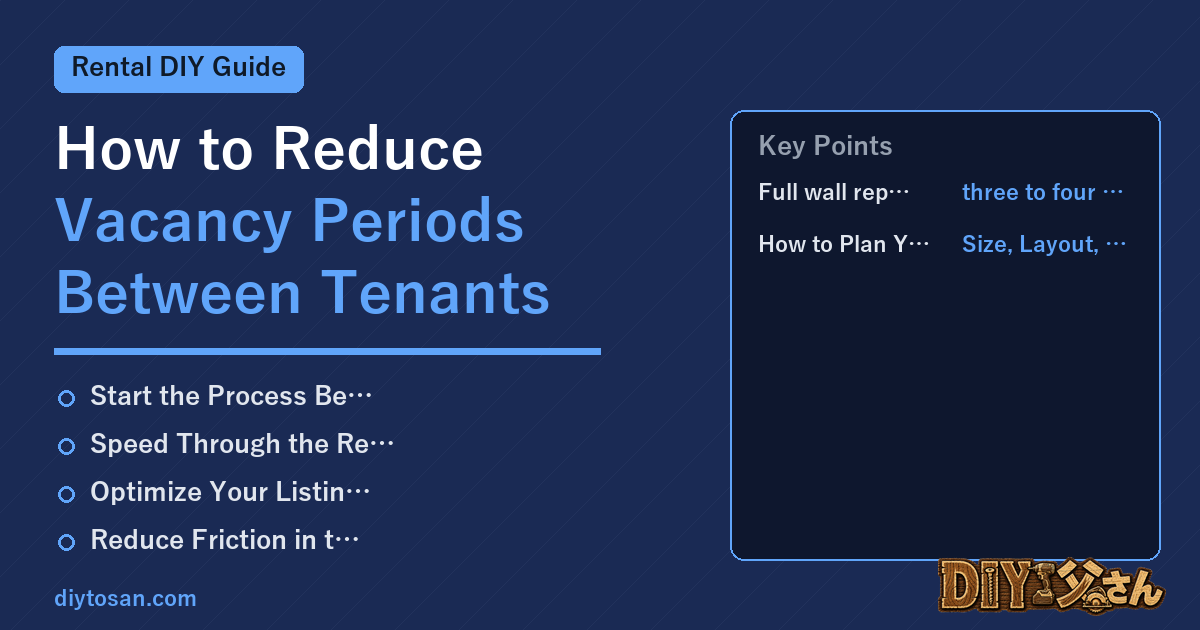
How to Reduce Vacancy Periods Between Tenants
A vacant unit isn’t just not earning money u2014 it’s actively costing me money in taxes, insurance, and the soft cost of my own time managing the transition. Over the years I’ve gotten my average vacancy period from over two months down to three to four weeks by systematically addressing every step of the turnover process. Here’s what actually moves the needle.
Start the Process Before the Current Tenant Leaves
ud83duded2 RECOMMENDED ON AMAZON US
Top Property Management Books
Build the knowledge base that separates professional landlords from amateur ones.
In Japan, notice periods for ordinary leases are typically one month, but most leases I write require two months’ notice. That extra month is valuable preparation time. As soon as I receive a move-out notice, I start the following:
- Contact my regular contractor for a preliminary assessment u2014 I describe the unit’s condition based on my last inspection and get a rough estimate for refresh work
- Begin drafting the property listing and taking updated exterior photos (I can photograph the building without disturbing the current tenant)
- Reach out to the real estate agent I work with to give them advance notice so they can pre-market to their waiting list
- Schedule the move-out inspection for within 48 hours of the tenant vacating
The biggest mistake I see other self-managing landlords make is treating the turnover as something that starts after the tenant leaves. By then, you’ve already lost at least two weeks.
Speed Through the Renovation Phase
ud83duded2 RECOMMENDED PRODUCTS
Landlord-Tenant Law Guides
Know exactly what you can and cannot do u2014 essential reading before any dispute.
The renovation (reno-vu) phase is where most vacancy time disappears. Landlords wait too long to get quotes, then spend a week comparing contractors, then wait for materials. I’ve solved this by maintaining ongoing relationships with two contractors u2014 a primary and a backup. They know my properties, they know my standards, and they can usually start within three to five days of move-out.
I’ve also standardized the materials I use. All my units use the same wall paint color, the same flooring type, and the same fixture finishes where possible. This means my contractor doesn’t need to source new materials for each job u2014 they already know what to order. It cuts a week off the process.
Typical refresh work for a clean departure unit:
- Full wall repainting: three to four days depending on unit size
- Flooring spot repair or full replacement if worn: two to five days
- Deep cleaning (haausu kuriiningu): one full day for a 1LDK unit
- Any appliance or fixture repairs: scheduled concurrently where possible
For units in good condition, I can complete a full turnover in seven to ten working days.
Optimize Your Listing for the Right Platforms
In Japan, most tenants find properties through SUUMO, HOME’S, or through a real estate agent’s own listings. If I’m self-managing the search process, I list on SUUMO and HOME’S simultaneously. The listing needs high-quality photos u2014 not phone snaps, but properly lit images that show the actual space. I invested in a basic wide-angle lens attachment years ago and it made a visible difference in inquiry volume.
Pricing matters enormously at this stage. I check comparable listings in the same area every time I re-list. The rental market shifts, especially in smaller cities, and being 5,000 yen above the current market rate can mean sitting empty for six extra weeks u2014 which costs far more than the rent difference would earn.
I also list the unit as “available from 2026/10/21” before the renovation is complete. As long as the move-in date is honest and I communicate clearly with the agent, this generates leads while the unit is still being refreshed. Some tenants are flexible on timing and will wait two weeks for the right place.
Reduce Friction in the Application Process
ud83duded2 RECOMMENDED PRODUCTS
Property Inspection Forms & Checklists
Document everything. A signed checklist at move-in prevents every deposit dispute.
When serious inquiries come in, speed is everything. A prospective tenant who is seriously looking will likely be considering two or three properties simultaneously. If my application process takes longer than a competitor’s, I lose them.
I’ve streamlined my side of the process by:
- Having my application form digitized so it can be filled out and returned by email
- Setting a 48-hour response target for all inquiries and application reviews
- Using a guarantee company that has an online approval system u2014 approvals can come back within 24 hours rather than the three to five days older systems required
- Having my lease agreement template ready to generate immediately upon approval
The goal is to get from “approved applicant” to “signed lease and deposit received” within one week. Every day that slips after approval is a day the tenant might find somewhere else.
Learn from Every Vacancy
After each tenancy ends, I document what worked and what didn’t. Was the vacancy longer than expected? Was it because of the renovation timeline, the listing quality, the price point, or the season? Japan has seasonal rental patterns u2014 the February to March period is the peak demand season due to the April job and school start. If I time a vacancy poorly and end up empty in summer or fall, I know to price more aggressively to compensate.
Reducing vacancy isn’t one big change u2014 it’s a dozen small improvements that compound. I track my average vacancy period year over year, and that single metric keeps me honest about whether my process is actually improving.
Property Management Company Evaluation u2014 12-Point Checklist
Developed after switching management companies twice. Saves you from costly mistakes that took me years to learn.
ud83cudfe0 More from DIY Father
15 years of landlord experience u00b7 3 apartment buildings u00b7 DIY renovations that saved millions of yen. Browse all articles at diytosan.com