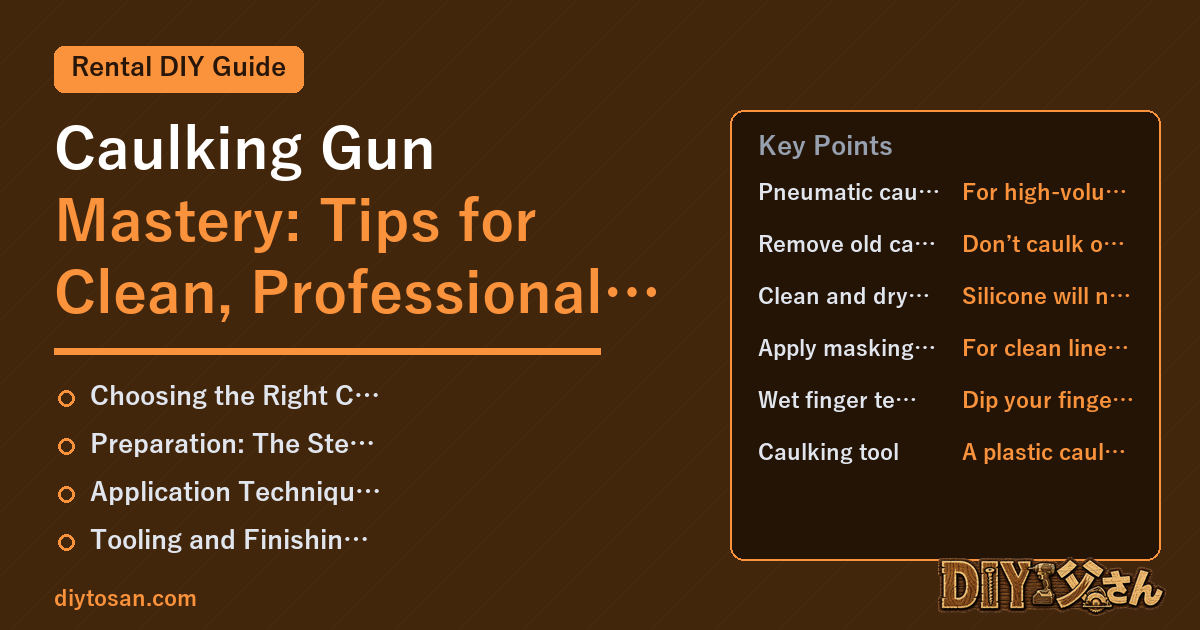
Caulking Gun Mastery: Tips for Clean, Professional Results
Nothing betrays an amateur repair faster than messy caulk lines. Silicone squeezed out in thick blobs, tooled unevenly, or with air bubbles throughout u2014 it looks bad and often fails prematurely because the joint profile is wrong. I’ve applied hundreds of meters of caulk across my rental properties, and the difference between amateur and professional results comes down to technique, preparation, and using the right gun. Here’s the complete guide.
Choosing the Right Caulking Gun
ud83duded2 RECOMMENDED PRODUCTS
18V Professional Impact Driver
My most-used tool. If you own one power tool, make it this.
The gun matters more than most people think. A cheap skeletal-frame gun with poor rod control makes even professional-grade silicone look amateur.
- Basic skeletal frame gun (around u00a5500u2013u00a51,000 at Cainz): Adequate for occasional use and for acrylic caulk (which is more forgiving than silicone). The main issues are inconsistent bead pressure and the rod drips after you release the trigger. If you’re doing occasional maintenance caulking, this is acceptable.
- Anti-drip gun (u30c9u30eau30c3u30d7u30d5u30eau30fc / u9006u6b62u3081u4ed8u304d): Has a spring-loaded mechanism that releases pressure from the tube when you lift your finger. This stops the sausage of silicone from continuing to squeeze out between lines. The Tajima GCO-300 (around u00a52,500) is an excellent choice at this price point, with smooth rod action and a reliable anti-drip mechanism. Worth the premium for regular landlord use.
- Pneumatic caulk gun: For high-volume application, pneumatic guns (connected to an air compressor) provide effortless, consistent bead delivery. Overkill for most landlords, but if you’re doing full-unit bathroom overhauls regularly, worth considering.
Preparation: The Step That Makes or Breaks the Job
ud83duded2 RECOMMENDED PRODUCTS
Power Tool Combo Kit (18V)
Combo kits are always better value than individual tools u2014 one battery charges all.
Professional caulking results start before you ever load the gun. Skipping preparation steps is the most common reason DIY caulk jobs look bad and fail early.
- Remove old caulk completely: Don’t caulk over old caulk. Ever. The new material won’t bond properly to the silicone surface, and the doubled thickness looks terrible. Use an oscillating tool or a dedicated caulk removal tool (the Tajima Caulk Remover, around u00a51,500) to cut out the old joint. For stubborn silicone, a silicone remover spray (available from Cemedine or Konishi, around u00a5800) softens the material for easier removal.
- Clean and dry the surface: Silicone will not bond to a wet surface, an oily surface, or a dusty surface. Wipe the joint with isopropyl alcohol (IPA) and let it dry completely before applying. This step is non-negotiable for bathroom and kitchen joints where future mold resistance depends on adhesion quality.
- Apply masking tape: For clean lines, apply masking tape (not regular tape u2014 use painter’s tape for better removal) along both sides of the joint, leaving exactly the joint width exposed. This is the single technique that separates professional-looking caulk from amateur work. Cut tape at 45-degree angles at corners. The Nitto Denko No. 720 wide-release tape (around u00a5600 per roll at MonotaRO) releases cleanly from most surfaces.
Application Technique: Getting a Consistent Bead
Cut the tube tip at 45 degrees. The cut size should match the joint width u2014 for a 5mm joint, cut to expose a 5mm opening. Smaller is better; you can always apply a second pass but you can’t take away excess.
- Hold the gun at a consistent 45-degree angle to the joint, nozzle pointing into the direction of travel.
- Apply consistent pressure on the trigger while moving at a steady pace. Practice on a piece of cardboard first to find the right trigger pressure-to-movement speed ratio for your specific gun and caulk combination.
- Don’t stop mid-joint if you can help it. Starting and stopping creates visible thickness variations. Plan your run to complete each section in one continuous motion.
- Release trigger pressure (with an anti-drip gun) or push the rod back slightly (with a basic gun) before lifting away from the joint.
Tooling and Finishing: Creating a Clean Profile
ud83duded2 RECOMMENDED PRODUCTS
Tool Storage & Workshop Organizer
A well-organized toolbox saves 20 minutes on every job. Multiply that by 100 repairs.
Fresh silicone needs to be tooled (shaped) before it skins over u2014 typically within 5u201310 minutes. This creates the curved profile that both looks professional and sheds water away from the joint.
- Wet finger technique: Dip your finger in soapy water and draw it along the bead in one smooth motion, pressing into the joint slightly. The soap prevents the silicone from sticking to your finger. Practice makes this natural u2014 expect the first few attempts to be imperfect.
- Caulking tool: A plastic caulking tool with multiple profiles (available for u00a5300u2013u00a5800 at home centers) gives more consistent results than a finger for longer joints and corners. The concave profile matches the standard joint shape.
- Remove tape immediately: Pull the masking tape off before the silicone skins, while it’s still tacky. Pull at a 45-degree angle away from the joint. If you wait too long, the tape tears rather than releases cleanly, and the silicone edge comes with it.
Mold prevention tip: after the silicone cures (24 hours for most products), wipe the joint with a cloth dampened with undiluted white vinegar. The acetic acid inhibits mold formation on the silicone surface. Repeat quarterly in bathrooms. Combined with good ventilation habits from tenants, this dramatically extends the life of bathroom caulk joints before they need replacement.
ud83cudfe0 More from DIY Father
15 years of landlord experience u00b7 3 apartment buildings u00b7 DIY renovations that saved millions of yen. Browse all articles at diytosan.com