ud83dudcda Bathroom Renovation Series u2014 16 of 25
u2190 Bathroom Renovation Vol.15: Wall Base Preparation u00b7 Series Index u00b7 Bathroom Renovation Vol.17: Ceiling Access Hatch Installation u2192
u270fufe0f Originally published: 2016-12-08 / ud83dudd04 Updated: May 8, 2026
- 2026 Update from DIY Dad: Under-Floor Storage & Ceiling Work in the Bathroom/Laundry Room
- Why Install Under-Floor Storage?
- Benefits DIY Dad Has Experienced
- How to Install Under-Floor Storage u2014 Step by Step
- About the Ceiling Access Hatch
- Wall Surface Prep (Patching) Is Just as Important
- From a Landlord’s Perspective u2014 It’s the Unseen Work That Counts
- ud83dudebf For Anyone Considering a Vanity or Wet-Area Renovation
- Building the Ceiling Access Hatch
2026 Update from DIY Dad: Under-Floor Storage & Ceiling Work in the Bathroom/Laundry Room
ud83duded2 RECOMMENDED PRODUCTS
Mold-Resistant Bathroom Caulk
Re-caulk every 3u20135 years. Black mold on caulk is the #1 tenant complaint in Japan.
The renovation is now in the second half. Installing new under-floor storage and a ceiling access hatch may seem unglamorous, but they’re critically important. More than ten years on as a landlord, DIY Dad is still glad these were done.
Why Install Under-Floor Storage?
Without under-floor access, the only option when floor inspection is needed is to pull up the flooring u2014 a major undertaking. In wet areas especially, the speed of response to plumbing problems (leaks, clogs) is completely different when you have a hatch.
Benefits DIY Dad Has Experienced
- Annual visual inspection of pipes (early detection of termites and corrosion)
- Direct visual check of drain pipe joints (early leak detection)
- Ability to inspect the condition of moisture-barrier sheeting
- Doubles as usable storage space (preserved food, emergency supplies, etc.)
How to Install Under-Floor Storage u2014 Step by Step
Using a prefabricated under-floor storage unit is the easiest approach. DIY Dad went with a Daiken standard unit for this project.
- Decide on placement (confirm it fits between existing floor joists).
- Cut the plywood and cushion floor to the opening size.
- Partially cut the floor joists and add reinforcement pieces.
- Drop the unit body in and secure it.
- Finish the lid by applying cushion floor material to it.
The most important step is reinforcing where the joists are cut. Cutting a joist reduces floor rigidity, so support pieces (same-size lumber) must be added at each cut end and screwed in. Skip this and the floor will flex and creak.
About the Ceiling Access Hatch
The ceiling access hatch follows the same philosophy as under-floor storage u2014 it’s infrastructure for quick access when needed. The ceiling of the bathroom/laundry room contains wiring for the ventilation fan and bathroom heater/dryer, so having a hatch makes future maintenance far easier.
Installation steps are nearly identical to the under-floor storage: cut an opening between ceiling furring strips (u91ceu7e01), drop in the unit, and secure it. However, cutting gypsum board ceiling material produces a huge amount of dust u2014 masking and a respirator mask are essential.
Wall Surface Prep (Patching) Is Just as Important
Once the under-floor and ceiling work is done, the next step is preparing for wallpaper replacement. Bathroom/laundry room walls are prone to patching compound peeling because of high moisture.
- Remove old wallpaper carefully (avoid damaging the gypsum board surface).
- If the substrate is damp, wait for it to dry completely (fan and dehumidifier).
- Use mold-resistant patching compound (essential in wet areas).
- Once dry, sand smooth.
DIY Dad’s biggest watchpoint in the bathroom/laundry room is moisture management. Applying wallpaper before the compound is fully dry is an invitation for mold later. Slow and steady wins the race.
From a Landlord’s Perspective u2014 It’s the Unseen Work That Counts
Tenants never see the under-floor space, the ceiling cavity, or the wall substrate. But doing this work carefully makes a huge difference in maintenance costs ten years down the road u2014 something DIY Dad has confirmed through 15 years of being a landlord.
ud83dudebf For Anyone Considering a Vanity or Wet-Area Renovation
Replacing a vanity unit is doable as a DIY project, but mistakes with shutoff valve operation or drain pipe connections can lead to leaks immediately. DIY Dad has lived the experience of “I thought I had it figured out, but the drain pipe shape was completely wrong” u2014 it was a moment of panic (laughs). Strongly recommended: confirm measurements and pipe types before starting.

Building the Ceiling Access Hatch
ud83duded2 RECOMMENDED PRODUCTS
Bathroom Vanity & Mirror Cabinets
Mirror cabinets add storage and light u2014 tenants notice immediately.
Hi, this is DIY Dad! Continuing the first-floor bathroom/laundry room renovation series.
Next up: building the ceiling access hatch. Tools and materials used: the ceiling access hatch unit, impact driver, and utility knife.
At the time, there was no existing access hatch in the ceiling. The bathroom/laundry room houses the main electrical panel (breaker box), which controls wiring throughout the house. As a separate project, a new outlet is being added in the kitchen u2014 and to run that new circuit, access to the back of the electrical panel is needed. That’s why this access hatch was necessary.
The process for a ceiling access hatch is quite similar to the under-floor storage installation: cut the opening u2192 install the frame u2192 reuse the cut-out ceiling material as the lid u2192 fit the lid u2192 done.
Marking and Cutting the Opening
First, mark out the cut-out size on the ceiling.
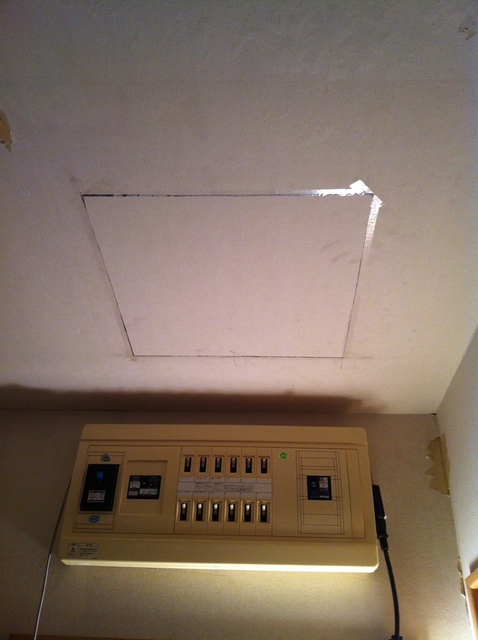
u2191 The layout markings.
Cut along the marked lines with a utility knife.
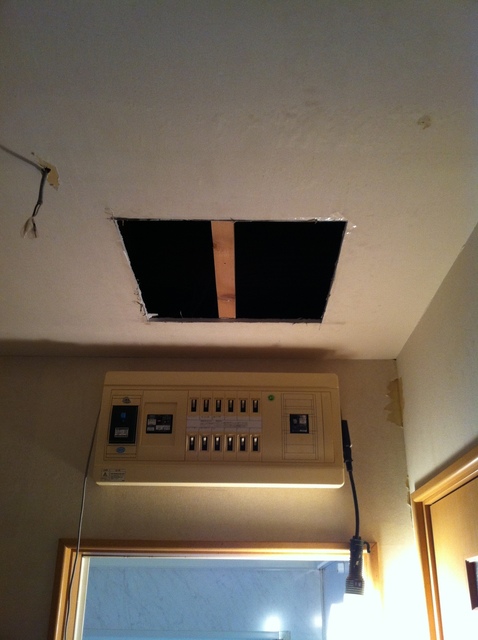
u2191 The opening is made. Keep the cut-out piece intact u2014 it becomes the lid.
With the gypsum board removed, a ceiling batten (furring strip) is visible in the opening. This needs to be cut away.
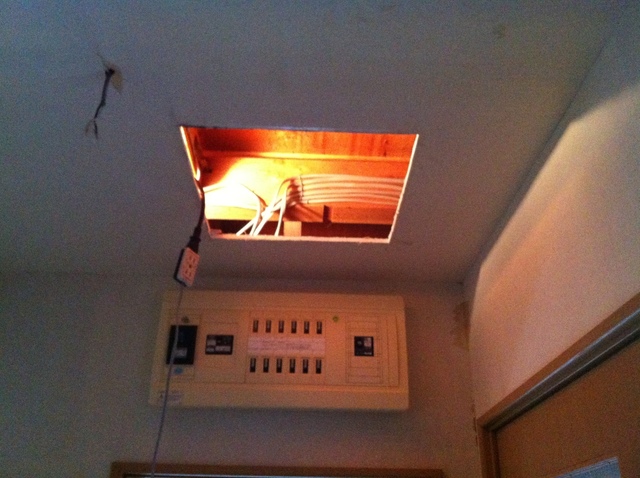
u2191 Batten removed from the opening.
Reinforcing the Ceiling Frame
Removing the batten reduces ceiling rigidity slightly. The ceiling access hatch doesn’t carry loads the way a floor does, but DIY Dad couldn’t leave it unreinforced. Scrap lumber was used to make reinforcement pieces.
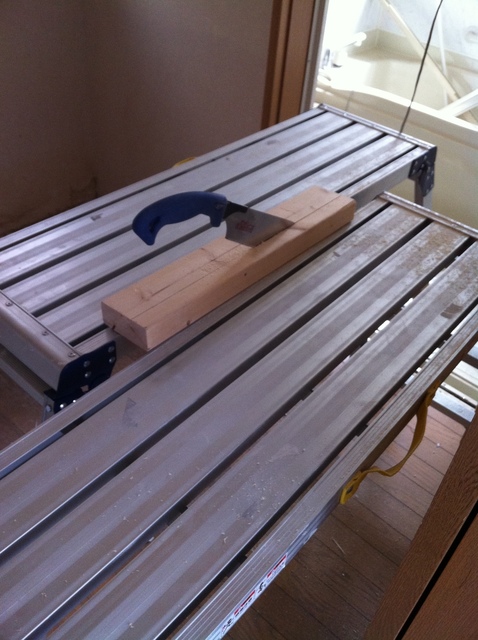
u2191 The reinforcement pieces.
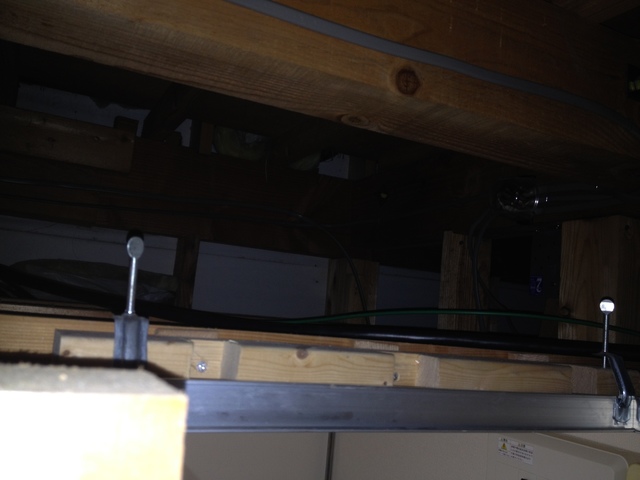
u2191 Reinforcement in place u2014 the frame is now solid. That’s all for today u2014 see you next time!
ud83dudcda Bathroom Renovation Series u2014 16 of 25
u2190 Bathroom Renovation Vol.15: Wall Base Preparation u00b7 Series Index u00b7 Bathroom Renovation Vol.17: Ceiling Access Hatch Installation u2192
DIY Renovation Quote Review Manual
How to read, compare, and negotiate contractor quotes. This manual saved me u00a5800,000 on a single renovation project.
ud83cudfe0 More from DIY Father
15 years of landlord experience u00b7 3 apartment buildings u00b7 DIY renovations that saved millions of yen. Browse all articles at diytosan.com