Wood-Frame (u6728u9020) vs. Reinforced Concrete (RC): Which Is Better for Investors?
When I was buying my first property, a real estate agent told me “RC is always better.” I’ve since come to realize that’s a salesperson’s oversimplification. The right construction type depends entirely on your investment goals, budget, and the specific market you’re entering. Let me break down the real differences from the perspective of someone who has owned both.
Construction Types in Japan: A Quick Primer
ud83duded2 RECOMMENDED ON AMAZON US
Real Estate Investment Books
The books that changed how I think about money, leverage, and long-term wealth.
Japan classifies buildings primarily by structural type:
- u6728u9020 (Mokuzou) u2014 Wood Frame: Traditional Japanese post-and-beam or modern platform framing. The most common residential construction type in Japan.
- u8efdu91cfu9244u9aa8 (Keiryo Tekkotsu) u2014 Light Steel Frame: Steel framing with thin-gauge members. Common in prefab apartment buildings from major manufacturers like Daiwa House and Sekisui House.
- u91cdu91cfu9244u9aa8 (Juryo Tekkotsu) u2014 Heavy Steel Frame: Thicker steel members, more durable than light steel. Used in mid-size commercial and residential buildings.
- RC (Reinforced Concrete / u9244u7b4bu30b3u30f3u30afu30eau30fcu30c8): Reinforced concrete structure. Strongest, most durable, and most expensive.
- SRC (Steel Reinforced Concrete / u9244u9aa8u9244u7b4bu30b3u30f3u30afu30eau30fcu30c8): Combines steel and concrete. Used in high-rise buildings.
For individual investors, the meaningful choice is usually between wood frame and RC (or sometimes light steel frame).
The Financial Case for Wood Frame
ud83duded2 RECOMMENDED ON AMAZON US
Financial Calculators for Investors
Run yield and cash-flow calculations in seconds u2014 worth every yen on your first deal.
Wood-frame buildings have one huge advantage for investors: price. A wood-frame apartment building of equivalent size and location typically costs 20-40% less than an RC building. This directly translates to higher yields.
The tax depreciation schedule also favors wood frame for active income offset strategies. The legal useful life for wood construction is 22 years, while RC is 47 years. This means you can depreciate a wood-frame building’s value much faster, creating larger paper losses in early years that can offset your rental income for tax purposes.
Consider these numbers from a property I analyzed recently:
- Wood-frame building, 1995-built, 6 units: asking price 18 million yen, annual rent 2.4 million yen, surface yield 13.3%
- RC building, same area, similar size, 2000-built: asking price 42 million yen, annual rent 4.2 million yen, surface yield 10%
The wood-frame property wins on yield by a significant margin. The lower price also means a lower loan amount and faster paydown.
The Case for RC: Durability and Tenant Appeal
RC buildings have real advantages that justify their premium in certain markets:
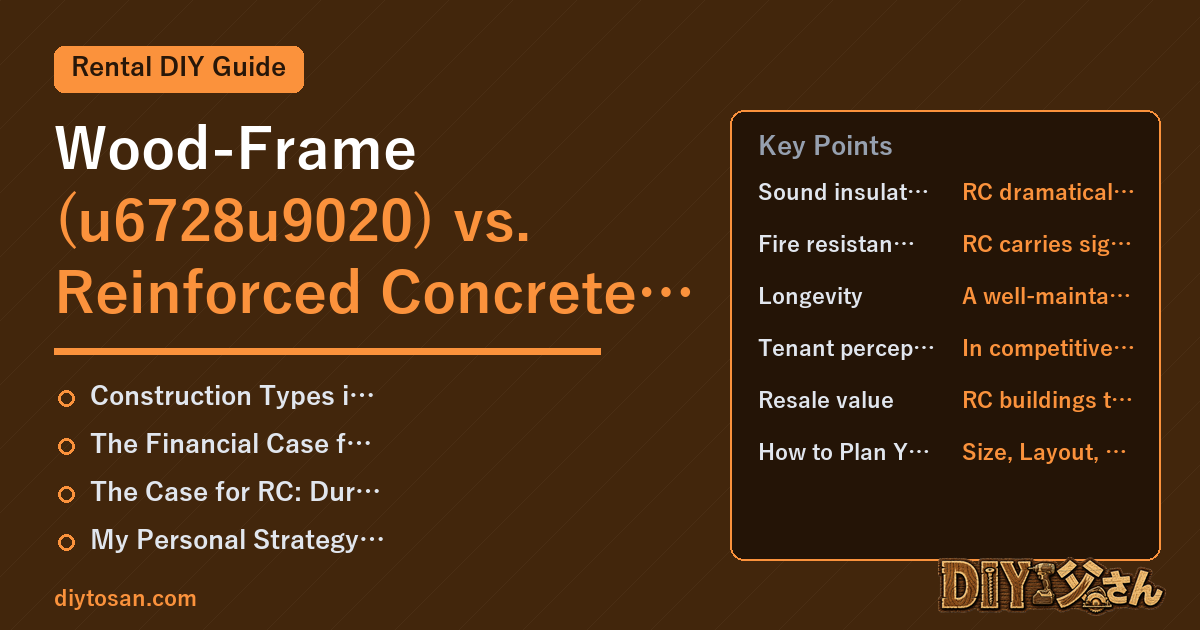
- Sound insulation: RC dramatically reduces noise transfer between units. This is a selling point for urban properties where tenants expect quiet.
- Fire resistance: RC carries significantly lower fire risk, which affects your insurance premiums and tenant confidence.
- Longevity: A well-maintained RC building can function effectively for 60-80 years or more. A wood-frame building realistically has a functional life of 40-50 years with good maintenance.
- Tenant perception: In competitive urban rental markets, some tenants specifically filter for RC buildings. This can reduce your vacancy rate.
- Resale value: RC buildings tend to hold value better because their longer remaining useful life is more attractive to future buyers.
My Personal Strategy: Wood Frame for Cash Flow, RC for Legacy
ud83duded2 RECOMMENDED PRODUCTS
Investment Analysis Templates
Spreadsheet analysis is the difference between a good deal and a disaster.
After owning both types, here’s how I think about it: wood-frame properties are better for cash flow and faster wealth building through leverage. RC properties are better if you’re thinking 30-40 years ahead and want to pass something substantial to your children.
My portfolio currently has two wood-frame buildings (one 1981-built, one 1992-built) and one RC building (2003-built). The wood-frame properties generate more cash per yen invested. The RC building has been essentially zero-maintenance for the five years I’ve owned itu2014I’ve spent maybe 200,000 yen total on repairs versus 900,000 yen on the older wood-frame building over the same period.
One important note: if you’re buying a pre-1981 building, check the seismic compliance carefully. Buildings built before the revised Building Standards Act (u65b0u8010u9707u57fau6e96) took effect in June 1981 may not meet current earthquake resistance standards. Some banks won’t finance these properties. Getting a seismic assessment (u8010u9707u8a3au65ad) is essential for any pre-1981 property.
There’s no universally “better” choice. Do the math for each specific property, understand your investment horizon, and choose the type that fits your strategy.
Property Cash Flow Calculator + Complete Guide
The exact Excel spreadsheet I use for every property purchase decision u2014 5-year projection, yield calculation, and break-even analysis included.
ud83cudfe0 More from DIY Father
15 years of landlord experience u00b7 3 apartment buildings u00b7 DIY renovations that saved millions of yen. Browse all articles at diytosan.com