ud83dudcda Wood Deck Build Log u2014 6 of 45
u2190 Design Goals & Requirements u00b7 Series Index u00b7 Frame Material Selection u2192
2026 Update from DIY Dad: Choosing Wood Deck Materials
ud83duded2 RECOMMENDED PRODUCTS
Pressure-Treated Deck Lumber
Pressure-treated lumber is the baseline u2014 skip it and you’ll be rebuilding in 5 years.
The most important decision in planning a wood deck is choosing the right materials. Whether to go with natural wood or composite wood, and which species to use u2014 these choices have a huge impact on cost, durability, and maintenance effort.
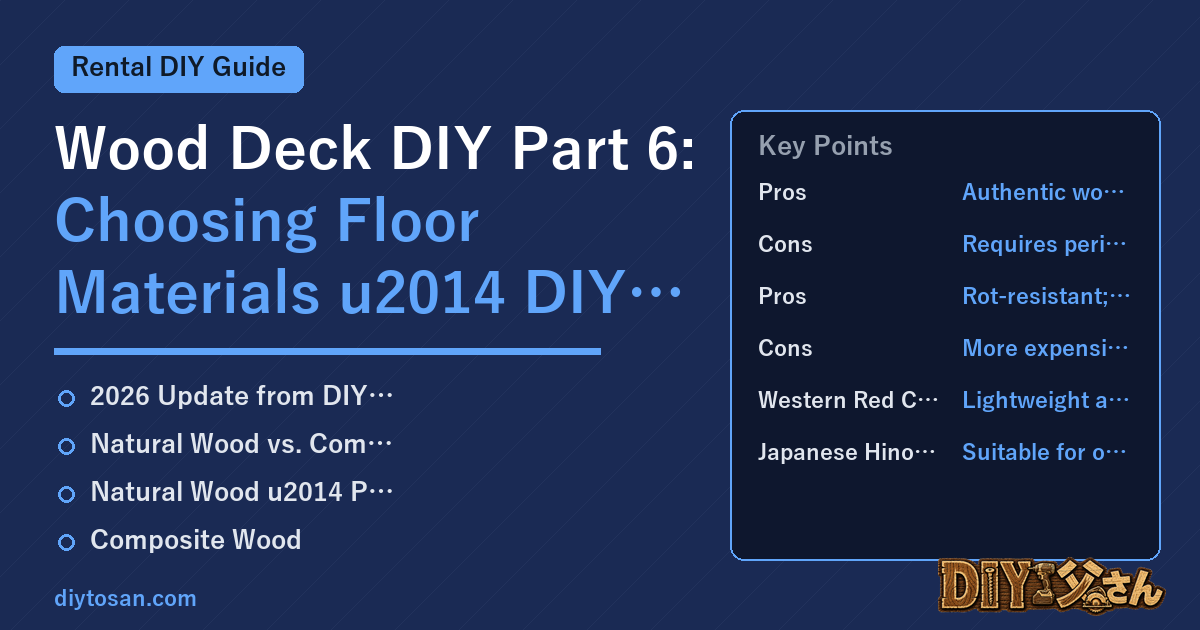
Natural Wood vs. Composite (Synthetic) Wood
ud83duded2 RECOMMENDED PRODUCTS
Deck Stains & Waterproof Sealers
Stain every 2u20133 years. It’s the single cheapest way to double deck lifespan.
Natural Wood u2014 Pros and Cons
- Pros: Authentic wood feel and warmth; lower material cost
- Cons: Requires periodic painting and maintenance; risk of rot and termite damage
Composite Wood (Wood-Plastic) u2014 Pros and Cons
- Pros: Rot-resistant; virtually maintenance-free; consistent quality
- Cons: More expensive than natural wood; gets very hot in summer; looks artificial
DIY Dad chose natural hardwood. The desire for an authentic wood feel, combined with cost considerations, made the decision clear.
Types and Characteristics of Natural Wood
Softwoods (Conifers)
- SPF (Spruce-Pine-Fir / Whitewood): Inexpensive. Must be painted. Not ideal for decking due to rot susceptibility.
- Western Red Cedar: Lightweight and easy to work with. Less durable than hardwood.
- Japanese Hinoki / Sugi: Suitable for outdoor use with pressure treatment. Affordable.
Hardwoods (Broadleaf)
- Ipe: Top-tier durability. Can last 30+ years without any finish. Expensive.
- Ulin (Ironwood / Belian): Extremely water-resistant and durable. Somewhat difficult to cut and drill.
- Bangkirai (Yellow Balau): Great value for money. An excellent balance of durability and price.
DIY Dad chose Bangkirai. Among hardwoods, it offers the best cost-performance ratio with plenty of durability for outdoor use.
Choosing Structural Frame Materials (Joists, Beams, Posts)
ud83duded2 RECOMMENDED PRODUCTS
Deck Screws & Fasteners
Use stainless screws only u2014 standard screws rust and stain the deck within one rainy season.
The structural framework of the deck u2014 joists, beams, and support posts u2014 needs to be just as durable as the decking boards, if not more so. If the frame rots, the whole deck fails.
Frame Material Options
- Aluminum square tubing: Rot-proof, lightweight, expensive. The most durable option.
- Hardwood square timber: Same material as the decking, giving a unified look.
- Pressure-treated lumber: Affordable, but requires periodic maintenance.
With cost efficiency as the priority, DIY Dad chose aluminum square tubing for the frame. The approach: natural wood warmth on the surface, aluminum durability in the structure.
To Roof or Not to Roof
Whether to add a roof over the deck is an important decision. A roof means:
- You can use the deck even in the rain
- The decking boards last longer (protected from direct sun and rain)
- The deck stays cooler in the peak of summer
Roof types: a polycarbonate panel pergola structure (DIY-friendly) or a factory-made patio roof cover (higher installation cost). DIY Dad built a pergola-style structure from scratch.
Hi, this is DIY Dad.
Today I went for a user vehicle inspection u2014 taking the car through the official test center myself rather than using a mechanic. Thatu2019s DIY Dadu2019s approach: do everything you can yourself. The fee you save is todayu2019s earnings!
Now, continuing the wood deck renovation series. Today Iu2019m thinking through the deck materials.
Given the conditions I want to meet, composite lumber seems like the obvious choice at first glance. But this deck will have a roof, which means the boards should stay in much better shape than an exposed deck u2014 so I donu2019t necessarily need expensive rot-resistant species to get a long service life.
I also have to think about working alone. That means workability and weight matter. And if I make a mistake mid-build and need to re-order, availability is important too.
So Iu2019m going with an affordable, easy-to-work-with softwood: SPF lumber from the home center. Widely available and very manageable to source.
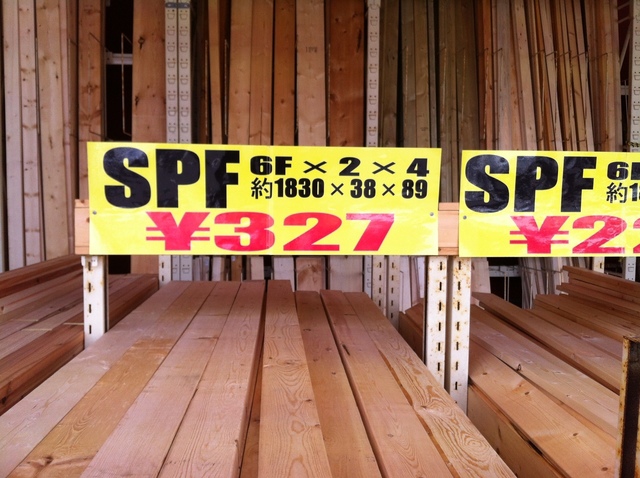
SPF lumber (2×4, 6-foot).
That said, one thing bothered me. SPF for the deck boards is fine u2014 but for load-bearing structural members like posts and beams, softwood feels risky. If the roof structure rots and collapses, thatu2019s a serious problem.
But using hardwood only for the structure while the boards are softwood doesnu2019t feel right either. In the end, both are wood. Either one will rot if maintenance is neglected. Outdoor wood always demands upkeep.
Still, DIY Dadu2019s goal is a deck thatu2019s as maintenance-free as possible. More on that as we go!
ud83dudcda Wood Deck Build Log u2014 6 of 45
u2190 Design Goals & Requirements u00b7 Series Index u00b7 Frame Material Selection u2192
DIY Renovation Quote Review Manual
How to read, compare, and negotiate contractor quotes. This manual saved me u00a5800,000 on a single renovation project.
ud83cudfe0 More from DIY Father
15 years of landlord experience u00b7 3 apartment buildings u00b7 DIY renovations that saved millions of yen. Browse all articles at diytosan.com